Home / Best Steel-Toe Boots
Best Steel-Toe Boots of 2026
When the site requires rated toe protection, the question becomes which boot you can still stand in at hour ten. These ASTM-rated safety boots from BRUNT, Thorogood, AdTec and more cover steel, composite and alloy toes across every trade.
16 picks · live prices from independent stores · updated daily


$174.95
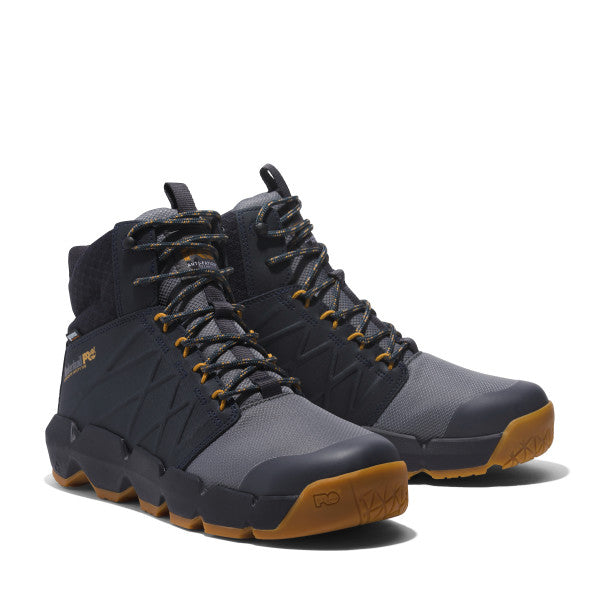
$159.95
![AdTec Adtec Legacy Pro: Women's 6" Moc Toe Work Boot: Whiskey Brown - [COMPOSITE TOE, EH, SRO]](https://cdn.shopify.com/s/files/1/0553/9312/4560/files/thumb.jpg)
![AdTec 1428- Logger: Men's 9" work boot- Black [Steel Toe]](https://cdn.shopify.com/s/files/1/0547/3289/products/1428.jpg)


Steel, composite or alloy: same rating, different living
All three cap materials can meet the same ASTM F2413 impact and compression standard — the differences are in daily wear. Steel is cheapest and thinnest but conducts cold straight to your toes and greets every metal detector. Composite (carbon fiber, Kevlar blends) runs a bit bulkier but stays temperature-neutral and scanner-silent, the electrician's and traveler's pick. Alloy splits the difference: thinner than composite, lighter than steel, pricier than both. Match the cap to your site's temperature and security checkpoints, not just the price tag.
Reading the ASTM label
The tongue label tells you what the boot is actually rated for: ASTM F2413 with I/75 and C/75 covers impact and compression — the baseline most sites mean by 'safety toe.' EH marks electrical hazard resistance, critical around live circuits. PR means puncture-resistant plates for nail-and-debris trades. If a spec sheet doesn't cite the standard, assume the 'safety toe' is decorative; every boot in this collection states its rating on the listing.
Comfort is a construction question
The cap gets the attention, but hour-ten comfort comes from everything else: a supportive shank for ladders, a footbed with real arch structure for concrete, and a fit with toe room in front of the cap — safety toes don't flex, so toes that touch the cap stay touching it all shift. Wedge soles spread pressure on flat concrete; lugged heels grip ladders and mud. Welted builds from Thorogood and BRUNT resole for a fraction of replacement, which matters in boots this expensive.
Frequently asked questions
+Are composite toes as safe as steel?
Both meet the identical ASTM F2413 impact and compression ratings required on job sites — a rated composite cap is not a lesser cap. Steel's edge is slimmer profile at a lower price; composite's is temperature neutrality and no metal detection.
+Why do my steel toes hurt?
Almost always fit, not the cap itself: the boot is too short or too narrow, pressing toes against an immovable wall. Size so your longest toe clears the cap with the boot flexed. Quality safety boots hide the cap so well you shouldn't feel it at all.
+How long do safety boots last?
Cemented builds in daily site use last around a year; welted builds go years with resoles. Replace immediately after any serious impact to the cap — like a bike helmet, it may have done its one job even if it looks fine.
Picks are selected from live inventory across independent stores on Agora and refresh as the catalog updates. Prices and availability come from each store; you check out securely on the merchant’s own site.